Structures and Buildings Allowance qualifying expenditure

The Structures and Buildings Allowances (SBA) facilitates tax relief for qualifying capital expenditure on new non-residential structures and buildings. The relief applies to the qualifying costs of building and renovating commercial structures. 

The relief was introduced in October 2018 at an annual capital allowance rate of 2% on a straight-line basis. From 1 April 2020, the annual rate was increased to 3% and the corresponding period reduced to 33 and one third years. 

HMRC’s internal manuals consider the meaning of qualifying capital expenditure for this tax relief. The manuals state that:

The amount of qualifying capital expenditure will depend upon whether the person who first uses the building constructed it themselves, or they acquired it unused from a developer. That amount is determined either directly from expenditure incurred on the construction of a building, or by comparing those costs with the sum paid for the relevant interest in the building.

From the total ‘qualifying expenditure’, any amounts that qualify for other capital allowances or are specifically disallowed must be removed. The qualifying expenditure does not change, even when the ownership of the building changes, there are exceptions relating to VAT liabilities and rebates.

Source: HM Revenue & Customs Tue, 23 Nov 2021 00:00:00 +0100

Tax Diary December 2021/January 2022

1 December 2021 – Due date for Corporation Tax payable for the year ended 28 February 2021.

19 December 2021 – PAYE and NIC deductions due for month ended 5 December 2021. (If you pay your tax electronically the due date is 22 December 2021).

19 December 2021 – Filing deadline for the CIS300 monthly return for the month ended 5 December 2021.

19 December 2021 – CIS tax deducted for the month ended 5 December 2021 is payable by today.

30 December 2021 – Deadline for filing 2020-21 self-assessment tax returns online to include a claim for under payments to be collected via tax code in 2022-23.

1 January 2022 – Due date for Corporation Tax due for the year ended 31 March 2021.

19 January 2022 – PAYE and NIC deductions due for month ended 5 January 2022. (If you pay your tax electronically the due date is 22 January 2022).

19 January 2022 – Filing deadline for the CIS300 monthly return for the month ended 5 January 2022.

19 January 2022 – CIS tax deducted for the month ended 5 January 2022 is payable by today.

31 January 2022 – Last day to file 2020-21 self-assessment tax returns online.

31 January 2022 – Balance of self-assessment tax owing for 2020-21 due to be settled on or before today unless you have elected to extend this deadline by formal agreement with HMRC. Also due is any first payment on account for 2021-22.

Source: HM Revenue & Customs Tue, 16 Nov 2021 00:00:00 +0100

A reminder of trivial benefit rules

We wanted to remind readers of the trivial benefits in kind (BiK) rules. The BiK exemption applies to small non-cash benefits like a bottle of wine, a bouquet of flowers given occasionally to employees, or any other benefit in kind classed as 'trivial' that falls within the exemption. By taking advantage of the exemption employers can simplify the treatment of BiKs whilst at the same time offering a tax efficient way to give small gifts to employees.

The trivial benefit rules provide an opportunity to give small rewards and incentives to employees. The main caveat being that the gifts are not provided as a reward for services performed or as part of the employees’ duties. However, gifts to employees on milestone events such as the birth of a child or a marriage or other gestures of goodwill would usually qualify.

The employer also benefits as the trivial benefits do not have to be included on PAYE settlement agreements or disclosed on P11D forms. There is also a matching exemption from Class 1A National Insurance contributions.

The tax exemption applies to trivial BiKs where the BiK:

  • is not cash or a cash-voucher; and
  • costs £50 or less; and
  • is not provided as part of a salary sacrifice or other contractual arrangement; and
  • is not provided in recognition of services performed by the employee as part of their employment, or in anticipation of such services.

The rules dictate that directors or other officeholders of close companies and their families, will be restricted to an annual cap of £300. The £50 limit remains for each gift. The £300 cap does not apply to employees. If the £50 limit is exceeded for any gift, the value of the benefit will be taxable.

Source: HM Revenue & Customs Tue, 16 Nov 2021 00:00:00 +0100

Business gifts

The rules for deciding whether a gift given in the course of business is deductible are complex. The rules for business gifts generally follow those for business entertaining expenditure. This means that HMRC take the view that in general business gifts are not an allowable deduction from profit for tax purposes.

However, there are exceptions to this rule. Where the following exceptions apply, the expenses incurred in providing the gift are deductible from trading profits. The exceptions are where:

  • the gift is of an item which it is the trader’s trade to provide and it is given away in the ordinary course of the trade to advertise to the public
  • the gift incorporates a conspicuous advertisement for the trader, although there are exclusions relating to the type of gift and the total amount per person
  • the gift is provided to the employees of the trader so long as this is not incidental to gifts being provided to others
  • the gift is given to charity or other specific bodies.

HMRC is clear that in some instances, something that appears to be a gift may actually be a part of a sale to a customer. HMRC’s manuals provide the example of a bunch of flowers presented to a customer who has just purchased a new car would effectively have been paid for by the customer – it is a part of the cost of the car. Similarly, gifts offered to customers who purchase a certain level of goods are really discounts on sale and not business gifts. Gifts of this nature are not disallowed by the legislation.

Source: HM Revenue & Customs Tue, 16 Nov 2021 00:00:00 +0100

Appealing to the First-tier Tribunal (Tax)

There are a number of different options open to taxpayers that disagree with a tax decision issued by HMRC. Usually, the first step is to make an appeal to HMRC against the tax decision. The case worker who made the decision will look at your case again and consider your appeal. If they do not change their decision, you can request what is known as a ‘statutory review’. This is where the decision is looked at by someone at HMRC who was not involved in the original decision.

If the taxpayers do not agree with HMRC’s review, there are further options available which include making an appeal to the tax tribunal or using the Alternative Dispute Resolution (ADR) process.

If you decide to appeal to the First-tier Tribunal (Tax) in relation to a ‘direct tax’ issue you must have appealed to HMRC first. For ‘indirect tax’ issues such as VAT and excise duties you can usually lodge an appeal straight to the Tribunal. An appeal to the Tribunal must be made within the time limit stated on your decision letter and any disputed tax ‘due’ must usually be paid upfront. An appeal can normally be made online or by post.

You can apply for ADR after you’ve appealed to the tribunal and your appeal has been accepted. The ADR seeks to offer a fair and quick outcome for both parties, helping to reduce costs and avoid a Tribunal case. However, in some cases the cost and effort of going to Tribunal can be worthwhile and needs to be properly considered.

Source: Tribunal Tue, 16 Nov 2021 00:00:00 +0100

If clients ask – trading hours for retailers

There are special rules that govern the trading hours that certain retailers must follow on a Sunday. These rules are defined in the Sunday Trading Act 1994 and apply to shops in England and Wales. The Act restricts the trading hours for retailers with a sales area that exceeds 280 square meters. Small shops in England and Wales are free to open on whatever days and hours they choose. There are no trading hours restrictions in Scotland.

Shops over 280 square metres:

  • Can open on Sundays but only for 6 consecutive hours between 10am and 6pm.
  • Must close on Easter Sunday.
  • Must close on Christmas Day.

Any shop affected by these rules must clearly display their opening hours both inside and outside their shop. There are also certain large shops that are exempt from these rules, including airport and railway station outlets, service station outlets and registered pharmacies.

There are similar rules in Northern Ireland, but large shops can only open between the fixed hours of 1pm and 6pm on a Sunday.

Source: HM Government Tue, 16 Nov 2021 00:00:00 +0100

VAT and business gifts

In general, VAT does not have to be accounted for on business gifts to the same person as long as the total cost of the gifts does not exceed £50 (before VAT) in any 12-month period. The definition of business gifts includes items from brochures, posters and advertising matters, gifts to trade customers, long service awards and retirement awards and goods given to customers as a ‘thank you’.

Where the total cost of business gifts given to the same person in any 12-month period exceeds £50, and the business was entitled to claim VAT on the purchase, then output tax must be accounted for on the total value of the gifts. It is acceptable to adopt any 12-month period that includes the day on which the gift is made.

There is no requirement for businesses to account for VAT if the gift is a free sample given for marketing purposes and that meets the following definition used by HMRC:

‘A specimen of a product which is intended to promote the sales of that product, and which allows the characteristics and qualities of that product to be assessed without resulting in final consumption, other than where final consumption is inherent in such promotional transactions.’

Source: HM Revenue & Customs Tue, 16 Nov 2021 00:00:00 +0100

Self-Assessment countdown

There are now less than two months to file your 2020-21 Self-Assessment tax return. Last year over 12.5 million taxpayers were required to complete a Self-Assessment tax return but over 1.8 million taxpayers missed the 31 January deadline.

The deadline for submitting your 2020-21 Self-Assessment tax returns online is 31 January 2022. You should also be aware that payment of any tax due should also be made by this date. This includes the payment of any balance of Self-Assessment liability for the 2020-21 plus the first payment on account due for the current 2021-22 tax year.

If you miss the filing deadline then you will usually be charged a £100 fixed penalty if your return is up to 3 months late, regardless of whether you owed tax or not. 

HMRC is encouraging taxpayers to complete their tax return as early as possible to avoid getting stressed as the filing date looms. In fact, last year over 2,700 taxpayers submitted their tax returns on Christmas Day with a further 8,500 taxpayers completing their tax returns on Boxing Day.

If you are filing online for the first time you should ensure you register to use HMRC’s self-assessment online service as soon as possible. Once registered an activation code will be sent by mail. This process can take up to 10 working days. 

Most COVID support scheme grants are treated as taxable income in the same way as other taxable receipts and need to be reported to HMRC. This means that if you received a support payment during the 2020-21 tax year, such as the Self-Employment Income Support Scheme, this needs to be reported on your self-assessment tax return. If you received the £500 one-off payment for working households receiving tax credits this does not need to be reported under self-assessment.

Source: HM Revenue & Customs Tue, 16 Nov 2021 00:00:00 +0100

VAT business test

There are a number of conditions that must be satisfied in order for an activity to be within the scope of UK VAT. One of the conditions that needs to be carefully considered when deciding whether an activity is within the scope of VAT is the concept that the supply must be made in the course or furtherance of business. 

This idea of 'business' is one of the less well-known rules. However, this is an important condition that drives the liability of a business to charge VAT on their sales, known as output VAT and on its ability to recover VAT, known as input tax.

In most cases, it will be clear whether an activity is ‘business’ related and should fall within the scope of VAT. However, in cases where the result is less clear cut, HMRC can use a business test to help. The test is based on a historic court case where the court identified six factors or indicators to determine whether an activity was ‘business’ related. The test should be applied to individual activities separately. 

HMRC’s internal manuals provide the following example:

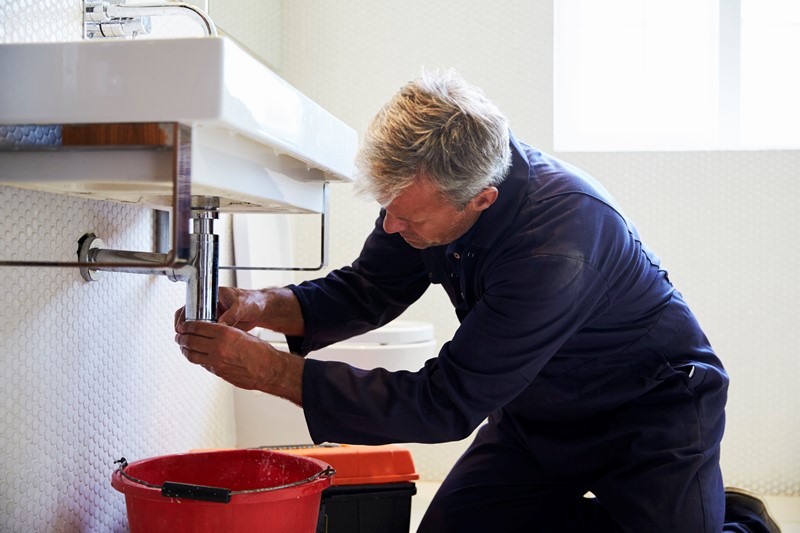
Imagine a person registered as a self-employed plumber who now and again renovates old cars. They do not automatically have to charge tax when selling those cars. This is because it would be hard to see the activity of car renovation being included within their business as a plumber.

On the other hand, if the car activity can be seen to have the attributes of a business in its own right then the plumber would have to charge tax on the sales.

Source: HM Revenue & Customs Tue, 09 Nov 2021 00:00:00 +0100

Tax treatment of incentive scheme awards

Some companies use incentive award schemes to encourage their employees in various ways. For example, to sell more of their own goods and services. The award can include cash-based, vouchers or other gifts.

Where an employer meets the tax payable on a non-cash incentive award given to a direct employee by entering into a PAYE settlement agreement (PSA), the award is not chargeable to tax on the employee.

With the exception of non-cash awards covered by a PSA, the incentive awards made to employees are chargeable as employment income. The value of these awards is calculated as follows:

Cash
The value to use is the total amount of cash awarded.

Vouchers
If the award consists of vouchers, then the value to use is the full cost to the provider of making the award.

Other gifts
If the award is something other than vouchers, then the charge is usually the full cost to the provider of making the award. There are certain exceptions for the very low paid.

There are also concessions which HMRC makes to enable you to say thank you to staff for specific areas including encouragement awards, suggestion schemes and to reward long service.

Source: HM Revenue & Customs Tue, 09 Nov 2021 00:00:00 +0100