Vehicles eligible for a plug-in grant

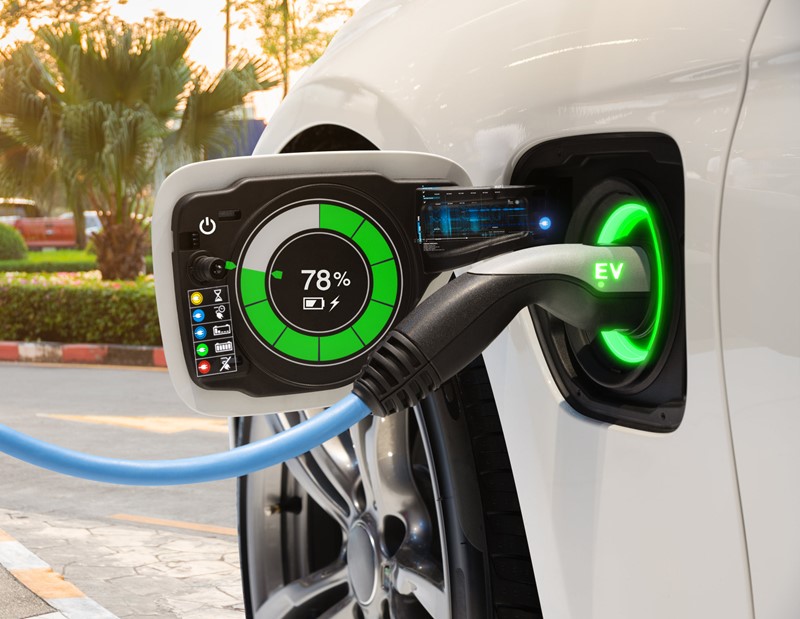
The low-emission vehicles plug-in grant can help you save up to £2,500 on the purchase price of new low-emission vehicles. The scheme was first launched in 2011 and is available across the UK with dealers using the grant towards the price of eligible new cars. The paperwork for the grant application is handled by the dealer you purchase your car from. The scheme is open to qualifying purchases by private individuals and businesses.

HMRC publishes a list of qualifying cars and only cars listed are eligible for the grant. There are also grants available for specified motorcycles, mopeds, small vans, large vans, taxis and trucks.

The grant is available for cars with CO2 emissions lower than 50g/km and a 'zero-emission' range of at least 112km. To qualify for the grant, the cars must have an 'on the road' price cap of less than £35,000. This means that many popular environmentally friendly electric cars are not available under the scheme as they sell for more than the price cap.

There are separate criteria for the other vehicle classes. For example, for motorcycles that have no CO2 emissions and can travel at least 50km (31 miles) between charges.


Source: HM Government Tue, 09 Nov 2021 00:00:00 +0100

Reporting COVID support scheme grants to HMRC

Most COVID support scheme grants are treated as taxable income in the same way as other taxable receipts and need to be reported to HMRC. The grants are treated as income where the business is within the scope of either Income Tax or Corporation Tax. This means that if you received a support payment during the COVID pandemic, this may need to be reported on your tax return. This applies to the self-employed, partnerships and businesses.

The treatment extends to support measures including the following:

  • the Self Employment Income Support Scheme (SEISS)
  • test and trace or self-isolation payments
  • the Coronavirus Job Retention Scheme (CJRS)
  • Eat Out to Help Out
  • Coronavirus Statutory Sick Pay Rebate
  • Coronavirus Business Support Grants

HMRC’s guidance is clear that whether or not any tax is paid will depend on the business profits of the grant recipient (taking into account the grant and other business income and expenditure under normal tax rules), any other taxable income they may have and any personal or other allowances to which they are entitled.

HMRC also has the power to recover payments and charge penalties where claimants have made support grant claims that they were not entitled to. There is no requirement to report COVID welfare payments made by a council such as those to help with council tax payments and housing benefit.

Loans, such as Bounce Back Loans or those from the Coronavirus Business Interruption Loan Scheme (CBILS), are not COVID-19 support payments.

Source: HM Revenue & Customs Tue, 09 Nov 2021 00:00:00 +0100

What can be transferred between group members?

Corporation Tax relief may be available when a company or organisation makes a trading loss. Companies that are eligible for group relief can transfer losses and certain other deficits to companies within the same group by means of Group or Consortium Relief. The use of group relief allows losses arising in the accounting period to be surrendered to a group company for that period. 

Companies attempting to either surrender or claim losses for Group Relief or Group Relief for carried forward losses, must meet the required conditions. For companies to be members of the same group, one company must be a 75% subsidiary of the other, or both must be 75% subsidiaries of a third company. The definition of ‘75% subsidiary’ requires one company to have direct or indirect beneficial ownership of at least 75% of the ordinary share capital in another. There are also further qualifying tests that may apply for group relief purposes, and this can be a complex area. 

Under Section 99 – Corporation tax Act 2010 the following losses (when qualifying) can be surrendered and claimed as group relief:

  • a trading loss 
  • a capital allowances excess 
  • non-trading deficit on loan relationship 
  • amounts allowable as qualifying charitable donations 
  • a UK property business loss 
  • management expenses 
  • a non-trading loss on intangible fixed assets 
Source: HM Revenue & Customs Tue, 09 Nov 2021 00:00:00 +0100

Tax treatment of incentive scheme awards

Some companies use incentive award schemes to encourage their employees in various ways. For example, to sell more of their own goods and services. The award can include cash-based, vouchers or other gifts.

Where an employer meets the tax payable on a non-cash incentive award given to a direct employee by entering into a PAYE settlement agreement (PSA), the award is not chargeable to tax on the employee.

With the exception of non-cash awards covered by a PSA, the incentive awards made to employees are chargeable as employment income. The value of these awards is calculated as follows:

Cash
The value to use is the total amount of cash awarded.

Vouchers
If the award consists of vouchers, then the value to use is the full cost to the provider of making the award.

Other gifts
If the award is something other than vouchers, then the charge is usually the full cost to the provider of making the award. There are certain exceptions for the very low paid.

There are also concessions which HMRC makes to enable you to say thank you to staff for specific areas including encouragement awards, suggestion schemes and to reward long service.

Source: HM Revenue & Customs Tue, 09 Nov 2021 00:00:00 +0100

Self-employed basis period reforms

The government announced back in September that the introduction of Making Tax Digital (MTD) for Income Tax Self-Assessment (ITSA) has been delayed by one year until April 2024. There had been widespread concerns on the speed of the MTD for ITSA rollout and the delay was widely welcomed.

In tandem with this announcement, the government also announced that proposals for Income Tax basis period reform would also be delayed until the 2024-25 tax year with 2023-24 being a transitional year. The proposals change the basis period from a ‘current year basis’ to a ‘tax year basis’. Under the current rules there can be overlapping basis periods, which charge tax on profits twice and generate corresponding ‘overlap relief’ which is usually given on cessation of the business. The new method of using a ‘tax year basis’ removes the basis period rules and prevents the creation of further overlap relief. 

HMRC has published a new policy paper on this change. The paper confirms that the measure will only affect businesses which draw up annual accounts to a date different to 31 March or 5 April (mainly seasonal businesses and large partnerships), and businesses that commence from 6 April 2024. On transition to the tax year basis in the tax year 2023 to 24, all businesses’ basis periods will be aligned to the tax year and all outstanding overlap relief given.

Source: HM Revenue & Customs Tue, 02 Nov 2021 00:00:00 +0100

More time to pay Capital Gains Tax

The Capital Gains Tax (CGT) reporting and payment date for UK residents that sell a residential property changed with effect from 6 April 2020. This change meant that any CGT due on the sale of a residential property needed to be reported and a payment on account of any CGT due made within 30 days of the completion of the transaction.

In the Autumn Budget, the Chancellor announced that the deadline for making CGT returns and associated payments on account would be changed from 30 days after completion to 60 days with immediate effect (from 27 October 2021).

In practice, this change only applies to the sale of any residential property that does not qualify for Private Residence Relief (PRR). The PRR relief applies to qualifying residential properly used wholly as a main family residence. 

HMRC has listed the following types of property sales that are affected:

  • a property that you have not used as your main home;
  • a holiday home;
  • a property which you let out for people to live in;
  • a property that you’ve inherited and have not used as your main home.

There can be penalties and interest if any CGT due on the sale of a UK property is not paid within the stated 60-day time limit. Relevant disposals that completed before 27 October 2021 remain subject to the 30-day deadline.

Source: HM Revenue & Customs Tue, 02 Nov 2021 00:00:00 +0100

Vehicle benefit charges from April 2022

The vehicle benefit charges were updated following the Chancellor's Budget speech. Where employees are provided with fuel for their own private use by their employers, the car fuel benefit charge is applicable. The fuel benefit charge is determined by reference to the CO2 rating of the car, applied to a fixed amount. The car fuel benefit charge will increase in 2022-23 to £25,300 (from £24,600). The fuel benefit is not applicable when the employee pays for all their private fuel.

The standard benefit charge for private use of a company van will increase to £3,600 (from £3,500). A company van is defined as ‘a van made available to an employee by reason of their employment’. There is an additional benefit charge for fuel when a van has significant private use. The limit will increase in 2022-23 to £688 (from £669). If private use of the van is insignificant then no benefit will apply.

Since 6 April 2021, the van benefit charge has been reduced to zero for vans that produce zero carbon emissions. This measure supports the governments climate change agenda by encouraging the uptake up of vans that emit zero carbon emissions.

Source: HM Revenue & Customs Tue, 02 Nov 2021 00:00:00 +0100

VAT reverse charge and the flat rate scheme

There are special VAT rules for building contractors and sub-contractors that came into effect on 1 March 2021. The new rules make the supply of most construction services between construction or building businesses subject to the domestic reverse charge. The reverse charge only applies to supplies of specified construction services to other businesses in the construction sector.

This means that since 1 March 2021, sub-contractors no longer add VAT to their supplies to most building customers, instead, contractors are obliged to pay the deemed output VAT on behalf of their registered sub-contractor suppliers. This is known as the domestic reverse charge.

There is an interesting exception for users of the flat rate scheme that means that reverse charge supplies are not to be accounted for under the scheme. Flat rate scheme users who receive reverse charge supplies therefore must account for the VAT due to HMRC and recover it simultaneously on the same VAT Return. Users of the scheme should consider if it’s still beneficial for them bearing in mind that under the scheme they cannot recover VAT incurred on purchases of materials and other expenditure subject to a VAT charge.

Source: HM Revenue & Customs Tue, 02 Nov 2021 00:00:00 +0100

Discovery assessment changes

HMRC has taken action to ensure that discovery assessments relating to certain aspects of the High Income Child Benefit Charge (HICBC), Gift Aid Donations and different pension charges act as intended.

According to HMRC, this new measure does not change this policy but makes a technical point to clarify the law to provide legal certainty and maintain the status quo. The change applies both retrospectively and prospectively and does not impose any additional liability.

A recent Upper Tribunal case found that HMRC did not have the power to recover an individual’s HICBC by issuing a discovery assessment. HMRC is appealing the decision to the Court of Appeal. However, in advance of that appeal, this new measure will provide certainty that HMRC may recover HICBC through the issue of a discovery assessment.

The legislation will not apply retrospectively to those individuals who previously received a discovery assessment and who appealed on or before 30 June 2021, the date at which the Upper Tribunal handed down its decision in the relevant case. However, HMRC will be hoping to win their Court of Appeal case which would make this a moot point.

Source: HM Revenue & Customs Tue, 02 Nov 2021 00:00:00 +0100

Switching between film and TV reliefs

Film tax relief (FTR) can increase the amount of expenditure that is allowable as a deduction for tax purposes or, if a company makes a loss, can be surrendered for a payable tax credit. To qualify for relief, films must be intended to be shown commercially in cinemas and at least 10% of the core costs must relate to activities in the UK. In addition, the film must be certified as British, either by passing a cultural test or under an agreed co-production treaty. The FTR allows qualifying companies to claim a payable cash rebate of up to 25% on UK qualifying expenditure.

One issue that has arisen since the FTR was first introduced, and accelerated during the pandemic, is the fact that more films are released directly to video on-demand services. This creates an issue for claiming FTR as one of the conditions is that the film must be intended for release to the public in cinemas. It is also not currently possible to retroactively qualify for high-end TV tax relief (HETV) because that would only be possible at the outset of filming.

The government is now proposing to allow claimants to continue claiming FTR even if the film is not released in cinemas but would otherwise qualify for the HETV. The new measure is expected to come into force from 1 April 2022.

Source: HM Revenue & Customs Tue, 02 Nov 2021 00:00:00 +0100