Tax on inherited private pensions

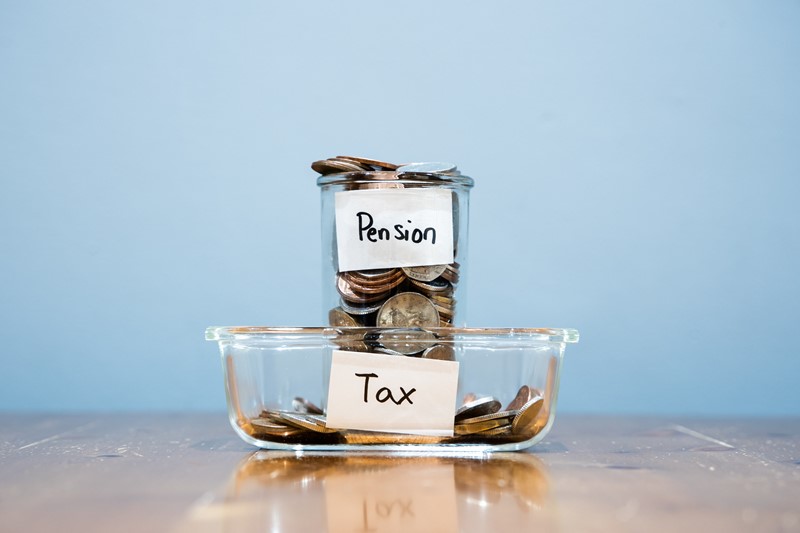
Private pensions can be an efficient way to pass on wealth, but it is important to consider what, if any, tax will be payable on a private pension you inherit. The person who died will usually have nominated you by telling their pension provider that you should inherit any monies left in their pension pot. If the nominated person can’t be found or has since died, the pension provider may make payments to someone else instead.

In general, if you inherit a private pension and the owner of the pension fund died before the age of 75, the benefits left in a private pension can be paid as a lump sum or drawdown income to you, with no tax to pay. If the deceased passed away after the age of 75 the pension will be taxed at your marginal income tax rate, so 20% if you are a basic rate taxpayer or 40% if you are in the higher tax bracket and 45% if you pay tax at the top rate. The rates may differ if you are a Scottish taxpayer.

There are restrictions on pensions from a defined benefit pot (usually workplace pensions) whereby the pension can only be paid to a dependant of the person who died, for example a husband, wife, civil partner or child under 23. This rule can sometimes be changed if the pension fund allows, but the inheritance will be taxed at up to 55% as an unauthorised payment.

The rules on inheriting a pension are complex and depend on what type it is and how old the holder was when they died. There are also important time limits that must be followed.


Source: HM Revenue & Customs Mon, 12 Feb 2024 00:00:00 +0100

What is Class 1A NIC?

Class 1A NICs are paid by employers in respect of most benefits in kind provided to employees such as a company car. Class 1A NICs are also due on charge on termination awards above a £30,000 threshold that have not already been subjected to Class 1 NICs deductions. There’s no employee contribution payable for Class 1A NICs.

Class 1A NICs are due in respect of most benefits provided to:

  • directors and certain other persons in controlling positions;
  • employees; and
  • members of the family or households of the above.

Where a benefit is provided as part of salary sacrifice or other optional remuneration arrangement (OpRA), special rules apply and the Class 1A NICs are calculated as a percentage of the relevant amount.

Certain conditions must apply before Class 1A NICs are due. These conditions are that the:

  • benefit must be from, or by reason of, an employee's employment and must be chargeable to Income Tax under ITEPA 2003 on an amount of general earnings as defined at Section 7(3) ITEPA 2003;
  • employment must be 'employed earner’s employment' under social security law and employment as a director or an employee;
  • benefit must not already attract a Class 1 NICs liability.

There is a statutory exemption for qualifying trivial benefits in kind costing £50 or less in kind. The tax-free exemption applies to small non-cash benefits like a bottle of wine, or a bouquet of flowers given occasionally to employees or any other BiK classed as 'trivial' that falls within the exemption. An annual cap of £300 is applicable for directors or other office-holders of close companies and to members of their families or households.

Source: HM Revenue & Customs Mon, 12 Feb 2024 00:00:00 +0100

The Valuation Office Agency tackles holiday lets

The Valuation Office Agency (VOA) is writing to some owners of self-catering holiday lets that are assessed for business rates. They are doing this because they need further information about the income and expenditure of these properties.

Last year, the VOA wrote to most self-catering holiday let owners in England and Wales to ask them to provide letting information about their property.

This information was used to determine if properties should be assessed for business rates or Council Tax.

If the VOA determined that your property should be assessed for business rates, you may receive another form which asks for additional information.

How The VOA will use your information

The information you provide will be used to calculate the rateable value of your property. Councils use rateable values to calculate business rates bills and determine if you are eligible for business rates reliefs.

The VOA are legally required to update the rateable values of all non-domestic properties, including self-catering holiday lets, every three years. This is called a revaluation.

They do this to make sure business rates bills are based on up-to-date information.

To value self-catering holiday lets, information is needed about your income and expenditure.

Provide the information within 56 days

Forms will be sent between February and August 2024.

If you receive a form from the VOA asking for information about your self-catering holiday let, it is important that you return it within 56 days of when it was issued.

If you do not, you may have to pay a penalty.

Check you have provided all the information the VOA have asked for before you return the form, even if you have previously shared information with the VOA. If you return the form and it is partially incomplete, you may still have to pay a penalty.

Source: Other Wed, 14 Feb 2024 00:00:00 +0100

Full-time and part-time contracts

As an employer, the tax and employment responsibilities you have for your staff will depend on the type of contract you give them and their employment status.

Contract types include:

  • full-time and part-time contracts
  • fixed-term contracts
  • agency staff
  • freelancers, consultants, contractors
  • zero-hours contracts

There are also special rules for employing family members, young people and volunteers.

As an employer you must give employees:

  • a written statement of employment or contract
  • the statutory minimum level of paid holiday
  • a payslip showing all deductions, such as National Insurance contributions (NICs)
  • the statutory minimum length of rest breaks
  • Statutory Sick Pay (SSP)
  • maternity, paternity and adoption pay and leave

You must also:

  • make sure employees do not work longer than the maximum allowed
  • pay employees at least the minimum wage
  • have employer’s liability insurance
  • provide a safe and secure working environment
  • register with HM Revenue and Customs to deal with payroll, tax and NICs
  • consider flexible working requests
  • avoid discrimination in the workplace
  • make reasonable adjustments to your business premises if your employee is disabled
Source: Other Wed, 14 Feb 2024 00:00:00 +0100

Tax Diary March/April 2024

1 March 2024 – Due date for Corporation Tax due for the year ended 31 May 2023.

2 March 2024 – Self-Assessment tax for 2022-23 paid after this date will incur a 5% surcharge unless liabilities are cleared by 1 April 2024, or an agreement has been reached with HMRC under their time to pay facility by the same date.

19 March 2024 – PAYE and NIC deductions due for month ended 5 March 2024 (If you pay your tax electronically the due date is 22 March 2024).

19 March 2024 – Filing deadline for the CIS300 monthly return for the month ended 5 March 2024. 

19 March 2024 – CIS tax deducted for the month ended 5 March 2024 is payable by today.

1 April 2024 – Due date for corporation tax due for the year ended 30 June 2023.

19 April 2024 – PAYE and NIC deductions due for month ended 5 April 2024. (If you pay your tax electronically the due date is 22 April 2024).

19 April 2024 – Filing deadline for the CIS300 monthly return for the month ended 5 April 2024. 

19 April 2024 – CIS tax deducted for the month ended 5 April 2024 is payable by today.

30 April 2024 – 2022-23 tax returns filed after this date will be subject to an additional £10 per day late filing penalty for a maximum of 90 days.

Source: HM Revenue & Customs Thu, 08 Feb 2024 00:00:00 +0100

Using your own vehicles for work-related journeys

If you are an employee and use your own money to buy things you need for your job you can sometimes claim tax relief for the associated costs. Usually, it is only possible to claim tax relief for the cost of items used solely for your work.

You may also be able to claim tax relief for using your own vehicle, be it a car, van, motorcycle or bike. As a general rule, there is no tax relief for ordinary commuting to and from your place of work. The rules are different for temporary workplaces, when the expense is usually allowable, and if you use your own vehicle to do other business-related mileage.

Employers usually make expense payments based on a set rate per mile depending on the mode of transport used. There are approved mileage rates published by HMRC. The approved mileage allowance payment rates are available where you use your own car on a business trip. Where the approved mileage rates are used, the payments to you are not regarded as a taxable benefit.

Where an employer pays less than the published rates, the employee can make a tax relief claim for the shortfall using mileage allowance relief. For all cars, the approved mileage allowance payment for the first 10,000 business miles is 45p per mile and 25p per mile for every additional business mile. The approved mileage rates are 20p per mile for bicycle travel and 24p per mile for motorcycle travel.

There is an additional passenger payment you can receive of 5p per passenger per business mile from your employer. This is available if you carry fellow employees in your car or van on journeys which are also work journeys for your colleagues. 

Source: HM Revenue & Customs Tue, 06 Feb 2024 00:00:00 +0100

Should you pay tax on selling goods online?

HMRC has published new guidance for taxpayers that regularly sell goods or services through an online marketplace. The guidance makes it clear that this activity could be treated as a ‘trade’ for UK tax purposes. If this is the case taxpayers may need to pay tax on income they earn from buying and selling goods as a trade or business using online marketplaces such as eBay. 

If taxpayers are just selling unwanted items that have been laying around their home, such as the contents of a loft or garage, it is unlikely that they will have to pay tax. However, if they buy goods for resale, or make goods with the intention of selling them for a profit, then they are likely to be trading and will have to pay tax on their profits.

There is also a £1,000 tax allowance for miscellaneous trading income. This is known as the Trading and Miscellaneous Income Allowance. Where this £1,000 allowance covers all the individual’s relevant income (before expenses) the income is tax-free and does not have to be declared to HMRC. 

Traders should note that since 1 January 2024, digital platforms are required to collect and report seller information and income to HMRC. These digital platforms must report sellers’ income by January 2025. The changes are an internationally agreed set of rules requiring digital platforms to report certain information to HMRC.

If you have trading income from online sales and are unsure what, if anything, you need to declare, please call so we can help you consider your options.

Source: HM Revenue & Customs Tue, 06 Feb 2024 00:00:00 +0100

Landlords – claiming maintenance and repairs costs

Landlords are able to claim for allowable expenses as a deduction from their rental income when calculating taxable rental profits to declare to HMRC. The expenses must relate wholly and exclusively for the purposes of renting out the property.

There is also a range of other types of expenses that can be claimed as a deduction when paid for by the landlord. This includes general maintenance and repairs to the property. It is important to note that this type of allowable expense includes the costs of maintenance and repairs to the property (but not ‘capital’ improvements).

HMRC’s guidance states that… a repair restores an asset to its original condition, sometimes by replacing parts of it.

Property repairs can include:

  • replacing roof tiles blown off by a storm;
  • replacing a broken-down boiler; and
  • redecoration between tenants to restore the property to its original condition.

Replacing a part of the property with the nearest modern equivalent is still a repair if the improvement is incidental to the repair, such as replacing a single-glazed window with a double-glazed window.

You cannot claim the costs for replacing furnishings or equipment in a property. These are not allowable as costs of maintenance and repairs but may qualify for replacement of domestic items relief.

Source: HM Revenue & Customs Tue, 06 Feb 2024 00:00:00 +0100

Reporting employee changes to HMRC

There are rules that businesses must follow when they are reporting employee changes. These changes must be sent to HMRC using a Full Payment Submission (FPS). The FPS is a submission that is required every time you pay your employees and must be submitted on or before the usual date you pay your employees. The information provided on an FPS helps HMRC ensure that they have the up-to-date information on your employees.

Additional information is required on your FPS if:

  • it includes a new employee
  • an employee leaves
  • you start paying someone a workplace pension
  • it’s the last report of the tax year
  • an employee changes their address

You may also need to tell HMRC if an employee:

  • becomes a director
  • reaches State Pension age
  • goes to work abroad
  • goes on jury service
  • dies
  • joins or leaves a contracted-out company pension
  • turns 16
  • is called up as a reservist
  • changes gender
Source: HM Revenue & Customs Tue, 06 Feb 2024 00:00:00 +0100

Record number of taxpayers file on time

HMRC has confirmed that more than 11.5 million people submitted their 2022-23 self-assessment tax returns by the 31 January deadline. This included over 778,000 taxpayers who left their filing until the final day and almost 33,000 that filed in the last hour (between 23:00 and 23:59) before the deadline!

Whilst this was the highest ever number of filings, there are still an estimated 600,000 taxpayers that have missed the deadline and are yet to file. Are you among those that missed the 31 January 2024 filing deadline for your 2022-23 self-assessment returns?

If you have missed the filing deadline then you will usually be charged a £100 fixed penalty if your return is up to 3 months late, regardless of whether you owed tax or not. If you do not file and pay before 1 May 2024 then you will face further penalties unless you have arranged to pay with HMRC.

If you are unable to pay your tax bill, there is an option to set up an online time to pay payment plan to spread the cost of tax due on 31 January 2024 for up to 12 months. This option is available for debts up to £30,000 and the payment plan needs to be set up no later than 60 days after the due date of a debt. This should be done sooner rather than later as a 5% late payment penalty will be charged if tax remains outstanding, and a payment plan has not been set up, before 1 April 2023.

If you owe self-assessment tax payments of over £30,000 or need longer than 12 months to pay in full, you can still apply to set up a time to pay arrangement with HMRC, but this cannot be done using the online service.

You can also plan ahead for the 2023-24 tax year by spreading the cost of your tax bill using HMRC’s Budget Payment Plan. The Budget Payment Plan enables those who are up to date with previous payments to make regular weekly or monthly contributions towards their next tax bill.

Source: HM Revenue & Customs Tue, 06 Feb 2024 00:00:00 +0100