VAT on period products scrapped

Before Brexit, the UK was unable to zero rate VAT on women’s sanitary products under EU rules and the items were subject to 5% VAT. Following the end of the transition period the UK was no longer bound by the EU VAT Directive which mandated a minimum 5% rate of VAT on all sanitary products, and the VAT charge, known as the ‘tampon tax’, was abolished with effect from 1 January 2021.

The government has now extended the VAT zero rate to period pants. Effective from 1 January 2024, women will save up to £2 on a £12 pair. Many of the UK’s largest retailers including M&S, Primark and Tesco, have committed to pass on the savings, worth 16%. This change was first announced as part of the Autumn Statement 2023 measures after 80 MPs, charities and retailers called on the government to scrap the VAT in August 2023.

The Financial Secretary to the Treasury said:

‘This is a victory for women across the UK and for the campaigners who’ve helped raise awareness of the growing importance of period pants.

It’s only right that women and girls can find more affordable options for what has become an essential and environmentally friendly product.’

Since reforming the ‘tampon tax’, the market for period underwear has expanded and they are now a mainstream choice for many women. The scrapping of the current VAT will ensure that period underwear is treated the same as traditional period products.


Source: HM Treasury Tue, 09 Jan 2024 00:00:00 +0100

National Insurance and tax after State Pension Age

If you have reached the State Pension age and continue to work, in most cases, you no longer need to pay National Insurance Contributions (NICs).

At State Pension age, the requirement to pay Class 1 and Class 2 NICs ceases. However, you will remain liable to pay any NICs due to be paid to you before reaching the State Pension age. If you continue working, you need to provide your employer with proof of your age.

Your employer remains liable to pay secondary Class 1 employer NICs. If you would rather not provide proof of age to your employer, you can request a letter (known as an age exception certificate) from HMRC confirming you have reached State Pension age and are no longer required to pay NICs.

If you are self-employed you will need to pay Class 4 NICs for the remainder of the year in which you reach State Pension age but will be exempt from the following year.

HMRC provides the following example. Someone who reached the State Pension age on 6 September 2023 will stop making Class 4 contributions on 5 April 2024 and pay their final Class 4 bill by 31 January 2025, together with any Income Tax due.

If you have overpaid NICs you can claim the excess back from HMRC.

Source: HM Revenue & Customs Tue, 09 Jan 2024 00:00:00 +0100

Business Asset Disposal Relief

Business Asset Disposal Relief (BADR) is available on the sale of a business, disposal of shares in a trading company or an individual’s interest in a trading partnership. Where this relief is available sellers can benefit from a 10% tax charge on exit from their business.

When the relief if available Capital Gains Tax (CGT) of 10% is payable in place of the standard rate. There are a number of qualifying conditions that must be met in order to qualify for the relief.

BADR used to be known as Entrepreneurs’ Relief before 6 April 2020. The name change did not affect the operation of the relief.

You can currently claim a total of £1 million in BADR over your lifetime. The £1m lifetime limit means you can qualify for the relief more than once. The lifetime limit may be higher if you sold assets before 11 March 2020.

Claims for BADR are made either through your self-assessment tax return or by filling in Section A of the Business Asset Disposal Relief helpsheet.

The deadline for claiming relief is as follows:

Tax year when you sold or closed your business Deadline to claim BADR
2021-22 31 January 2024
2022-23 31 January 2025
2023-24 31 January 2026
Source: HM Revenue & Customs Tue, 09 Jan 2024 00:00:00 +0100

New tax credits for film, TV and game makers

A number of reforms to tax reliefs for the creative sectors came into effect from 1 January 2024. Under the reformed system, a children’s TV production, animated TV production or film with £1 million of qualifying expenditure will receive an additional £42,500 in relief. A high-end TV production, film production or video game will receive £5,000 in relief. The uplift in relief for animation has also been extended to include animated films as well as TV programmes.

The credits will be calculated directly from a production or game’s qualifying expenditure, instead of being an adjustment to the company’s taxable profit.

Animation and children’s TV productions will be eligible for a higher credit rate of 39%, a rate increase of 4.25%. The 34% credit rate for film, high end TV and video games is roughly equivalent to a rate increase of 0.5%.

Productions and games in development on 1 April 2025 may continue to use the previous tax reliefs until they end or until 1 April 2027 to provide companies with additional time to adapt to the new expenditure credits.

In addition, as part of the Spring Budget 2023 measures, the temporary higher rates for Theatre Tax Relief (TTR), Orchestra Tax Relief (OTR) and Museums and Galleries Exhibitions Tax Relief (MGETR) were extended for two further years until 1 April 2025.

Source: HM Treasury Tue, 09 Jan 2024 00:00:00 +0100

Using your vehicle for work related journeys

If you use your car or other vehicle to undertake business journeys on behalf of your employer, and your employer does not:

  • Fully reimburse you for the business use, or
  • Reimburses you but at a lower rate per mile than the approved HMRC rates (see below).

Then you may be able to make a claim to HMRC and reduce your overall tax bill.

HMRC’s notes on this topic are reproduced below:

Vehicles you use for work

You may be able to claim tax relief if you use cars, vans, motorcycles or bicycles for work.

This does not include travelling to and from your work unless it’s a temporary place of work.

How much you can claim depends on whether you’re using:

  • a vehicle that you’ve bought or leased with your own money
  • a vehicle owned or leased by your employer (a company vehicle)

You can claim for this tax year and the 4 previous tax years if you’re eligible.

Using your own vehicle for work

If you use your own vehicle or vehicles for work, you may be able to claim tax relief on the approved mileage rate. This covers the cost of owning and running your vehicle. You cannot claim separately for things like:

  • fuel
  • electricity
  • vehicle tax
  • MOTs
  • repairs

To work out how much you can claim for each tax year you’ll need to:

  • keep records of the dates and mileage of your work journeys;
  • add up the mileage for each vehicle type you’ve used for work; and
  • take away any amount your employer pays you towards your costs, (sometimes called a ‘mileage allowance’).

Approved mileage rates


First 10,000 business miles in the tax year

Each business mile over 10,000 in the tax year

Cars and vans

45p

25p

Motorcycles

24p

24p

Bicycles

20p

20p

Using a company car for business

You can claim tax relief on the money you have spent on fuel and electricity, for business trips in your company car. Keep records to show the actual cost of the fuel.

If your employer reimburses some of the money, you can claim relief on the difference.

How to claim

If you complete a self-assessment tax return, you must claim through your tax return instead.

Source: Other Tue, 09 Jan 2024 00:00:00 +0100

Setting up a payment plan with HMRC

The 31st of January is a key date for those of us who are registered for self-assessment. There are three deadlines:

  1. The closing date to file your 2022-23 tax return without incurring an initial £100 late filing penalty.
  2. The date by which any balance of tax, NIC, or student loan payback needs to be made for 2022-23.
  3. Due date for making the first payment on account for 2023-24.

What to do if you cannot afford to make these payments

HMRC will allow taxpayers who cannot meet these tax payments by 31st of January, to spread the cost by applying for a formal HMRC payment plan.

The instructions posted on the GOV.uk website are reproduced below:

Setting up a payment plan

To set up a payment plan you will need:

  • the relevant reference number for the tax you cannot pay, such as your unique tax reference number;
  • your UK bank account details – you must be authorised to set up a Direct Debit; and
  • details of any previous payments you have missed.

You may be able to set up a payment plan online, depending on which type of tax you owe and how much you owe.

If you owe tax from self-assessment

You can set up a self-assessment payment plan online if you:

  • have filed your latest tax return;
  • owe £30,000 or less;
  • are within 60 days of the payment deadline; and
  • do not have any other payment plans or debts with HMRC.

HMRC will ask you about your income and spending when you set up your plan.

Source: Other Tue, 09 Jan 2024 00:00:00 +0100

Spring Budget 2024

The Chancellor of the Exchequer, Jeremy Hunt has confirmed that the next UK Budget will take place on Wednesday, 6 March 2024. This will be the Chancellor’s second Budget and will include the government's tax and spending plans as well as new growth and borrowing forecasts. Various pundits are suggesting that selecting a Budget date in early March leaves the possibility of a general election as early as May 2024. The next general election is required to take place by January 2025.

There may be a round of new tax-cuts and changes as the government works to attract voters and narrow the gap against Labour. Details of all the Budget announcements will be made on a special section of the GOV.UK website which will be updated following completion of the Chancellor’s speech.

The Budget will be published alongside the latest forecasts from the Office for Budget Responsibility (OBR). This forecast will be in addition to that published for the Autumn Statement and fulfil the obligation for the OBR to produce at least two forecasts in a financial year, as is required by legislation.

The OBR has executive responsibility for producing the official UK economic and fiscal forecasts, evaluating the government’s performance against its fiscal targets, assessing the sustainability of and risks to the public finances and scrutinising government tax and welfare spending.

Source: HM Treasury Tue, 02 Jan 2024 00:00:00 +0100

What happens if your income exceeds £100K 2023-24?

If you earn over £100,000 in any tax year your personal allowance is gradually reduced by £1 for every £2 of adjusted net income over £100,000 irrespective of age. This means that any taxable receipt that takes your income over £100,000 will result in a reduction in personal tax allowances. Accordingly, your personal Income Tax allowance would be reduced to zero if your adjusted net income is £125,140 or above.

Your adjusted net income is your total taxable income before any personal allowances, less certain tax reliefs such as trading losses and certain charitable donations and pension contributions.

For the current tax year, if your adjusted net income is likely to fall between £100,000 and £125,140 you would pay an effective marginal rate of tax of 60% as your £12,570 tax-free personal allowance is gradually withdrawn.

If your income sits within this band, you should consider planning opportunities available to avoid this personal allowance trap by reducing your income below £100,000. This can include giving gifts to charity, increasing pension contributions and participating in certain investment schemes.

A higher rate or additional rate taxpayer who wanted to reduce their tax bill could make a gift to charity in the current tax year and elect to carry back the contribution to 2022-23. A request to carry back the donation must be made before or at the same time as the 2022-23 self-assessment return is completed i.e., by 31 January 2024.

Source: HM Revenue & Customs Tue, 02 Jan 2024 00:00:00 +0100

Do you need to register for VAT in 2024?

The taxable turnover threshold that determines whether businesses should be registered for VAT is currently £85,000. The taxable turnover threshold that determines whether businesses can apply for deregistration is £83,000.

Businesses are required to register for VAT if they meet either of the following two conditions:

  1. at the end of any month, the value of the taxable supplies made in the past 12 months or less has exceeded £85,000; or
  2. at any time, there are reasonable grounds for believing that the value of taxable supplies to be made in the next 30 days alone will exceed £85,000.

This means that you are required to look back over the last 12 months to see if you have a requirement to register and at the same time keep an eye on your future sales if you expect to make taxable supplies over £85,000 in the next 30 days.

The registration threshold for relevant acquisitions from other EU Member States into Northern Ireland is also £85,000.

Businesses with no physical presence in the UK may have a liability to be VAT registered in the UK if they supply any goods or services to the UK (or expect to in the next 30 days).

Source: HM Revenue & Customs Tue, 02 Jan 2024 00:00:00 +0100

Welsh Budget 2024-25

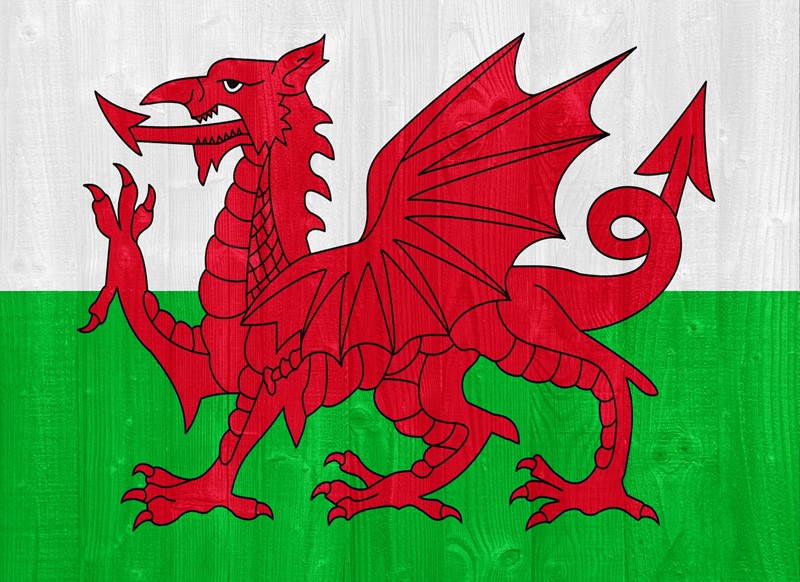
The Welsh draft Budget for 2024-25 was published on 19 December 2023. The Budget sets out the Welsh government’s revenue and capital spending proposals, including detailed portfolio spending plans.

There have been no changes announced to the Welsh rates of Income Tax (WRIT) which will continue to be set at 10p for 2024-25. This means that the rates of Income Tax paid by Welsh taxpayers will continue to be the same as those paid by English and Northern Irish taxpayers in the new tax year.

This draft Budget does not include any proposed changes to the current Land Transaction Tax (LTT) rates. Two consultations on the future of LTT will, however, be launched at a later date. The Welsh government has also confirmed that the Landfill Disposals Tax (LDT) rates will continue to mirror the UK landfill tax rates in 2024-25.

The Welsh Government confirmed that they will cap the increase to the Non-Domestic Rates (NDR) multiplier in Wales to 5% for 2024-25. This is lower than the 6.7% increase which would otherwise apply from the default inflation of the multiplier in line with CPI. Retail, leisure and hospitality ratepayers (RLHRR) in Wales will receive a 40% non-domestic rates relief for the duration of 2024-5. The RLHRR scheme will continue to be capped at £110,000 per business across Wales.

The plans outlined in the Draft Welsh Budget will be debated in Senedd Cymru, the Welsh Parliament. Following scrutiny of these plans by Senedd Cymru. The Welsh Government will publish the Final Budget 2024-25 on 27 February 2024.

Source: National Assembly for Wales Tue, 02 Jan 2024 00:00:00 +0100