Bed and breakfast share sales

The term bed and breakfasting (sale and repurchase) of shares refers to transactions where shares are sold and bought back the next morning. This used to have Capital Gains Tax (CGT) benefits by crystallising a gain or a loss but is no longer tax effective over such a short period. The change to the rule happened in 1998 when new legislation introduced special share matching rules. Under these rules there are a number of limitations including a 30-day waiting period before the shares can be repurchased.

However, it is possible under certain circumstances to use a modified bed and breakfasting type of arrangement to sell an asset and buy it back again a short time later. A gain could be created in order to use up the annual exempt amount, or a non-resident may bed and breakfast their chargeable assets to establish a higher base cost before they enter the UK tax regime.

We would recommend you seek our advice before undertaking any such transactions to ensure that all tax aspects have been considered. For example, for any bed and breakfast transaction to be effective, there must be a genuine transfer of beneficial ownership of the asset and the share matching rules must be met.

Source: HM Revenue & Customs Tue, 16 Jan 2024 00:00:00 +0100

Full expensing of capital purchases

A reminder to readers that the full expensing 100% first-year capital allowance for qualifying plant and machinery assets came into effect last April. To qualify for full expensing, expenditure must be incurred on the provision of “main rate” plant or machinery. Full expensing is only available to companies subject to Corporation Tax.

Plant and machinery that may qualify for full expensing includes (but is not limited to):

  • machines such as computers, printers, lathes and planers;
  • office equipment such as desks and chairs;
  • vehicles such as vans, lorries and tractors (but not cars);
  • warehousing equipment such as forklift trucks, pallet trucks, shelving and stackers;
  • tools such as ladders and drills;
  • construction equipment such as excavators, compactors, and bulldozers; and
  • some fixtures such as kitchen and bathroom fittings and fire alarm systems in non-residential property.

When the full expensing rules were first announced, the relief was set to apply until 31 March 2026. The Autumn Statement 2023 extended this deadline and announced that full expensing would be made permanent. Legislation will be introduced to remove the 2026 end date.

Under full expensing, for every pound a company invests, their taxes will be cut by up to 25p. For “special rate” expenditure, which does not qualify for full expensing, a 50% first-year allowance (FYA) can currently be claimed instead.

Businesses can also continue to use the Annual Investment Allowance (AIA) to claim a 100% tax deduction on qualifying expenditure on plant and machinery of up to £1m per year. This includes unincorporated businesses and most partnerships.

Source: HM Treasury Tue, 16 Jan 2024 00:00:00 +0100

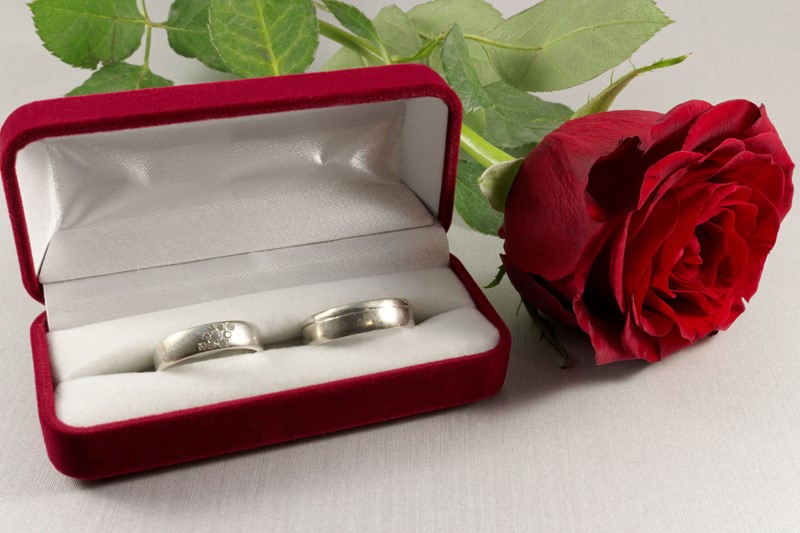
Reminder to claim the Marriage Allowance

The marriage allowance applies to married couples and those in a civil partnership where a spouse or civil partner does not pay tax or does not pay tax above the basic rate threshold for Income Tax (i.e., one of the couples must currently earn less than the £12,570 personal allowance for 2023-24).

The allowance works by permitting the lower earning partner to transfer up to £1,260 of their personal tax-free allowance to their spouse or civil partner. The marriage allowance can only be used when the recipient of the transfer (the higher earning partner) does not pay more than the basic 20% rate of Income Tax. This would usually mean that their income is between £12,571 and £50,270 for 2023-24. For those living in Scotland this would usually mean income between £12,571 and £43,662.

Using the allowance, the lower earning partner can transfer up to £1,260 of their unused personal tax-free allowance to a spouse or civil partner. This could result in a saving of up to £252 for the recipient (20% of £1,260), or £21 a month for the current tax year.

If you meet the eligibility requirements and have not yet claimed the allowance, then you can backdate your claim as far back as 6 April 2019. This could result in a total tax break of up to £1,256 if you can claim for 2019-20, 2020-21, 2021-22, 2022-23 as well as the current 2023-24 tax year.

HMRC’s online Marriage Allowance calculator can be used by couples to find out if they are eligible for the relief. An application can then be made online at GOV.UK.

Source: HM Revenue & Customs Tue, 16 Jan 2024 00:00:00 +0100

IHT gifts – 7 year limit

Most gifts made during a person’s life are not subject to tax at the time of the gift. These lifetime transfers are known as 'potentially exempt transfers' or 'PETs'. These gifts or transfers achieve their potential of becoming exempt if the taxpayer survives for more than 7-years after making the gift. If the taxpayer dies within 3-years of making the gift, then the inheritance tax position is as if the gift was made on death. A tapered relief is available if death occurs between 3 and 7 years after the gift is made.

The effective rates of tax on the excess over the nil rate band are:

  • 0 to 3 years before death            40%
  • 3 to 4 years before death            32%
  • 4 to 5 years before death            24%
  • 5 to 6 years before death            16%
  • 6 to 7 years before death            8%
  • 7 or more years before death       0%

These tapered rates cannot reduce the tax due on a lifetime chargeable transfer below the amount chargeable when the transfer was made and so are of no benefit to a transfer within the nil rate band.

We would strongly recommend that you keep a list of any PETs that you make. It is also important to keep a record of any exemptions that are used as well as details of any regular gifts made out of surplus income.

Source: HM Revenue & Customs Tue, 16 Jan 2024 00:00:00 +0100

Using the VAT Flat Rate Scheme

The VAT Flat Rate scheme allows businesses to pay VAT as a fixed percentage of their VAT inclusive turnover. The actual percentage used depends on the type of business. The scheme has been designed to simplify the way a business accounts for VAT and in so doing reduce the administration costs of complying with the VAT legislation.

The scheme is open to businesses that expect their annual taxable turnover in the next 12 months to be no more than £150,000, excluding VAT. The annual taxable turnover limit is the total of everything that a business sells during the year. It includes standard, reduced rate or zero rate sales and other supplies. It excludes the actual VAT charged, VAT exempt sales and sales of capital assets.

A limited cost trader test was introduced in April 2017. Businesses that meet the definition of a 'limited cost trader' are required to use a fixed rate of 16.5% for the scheme. Businesses defined as limited cost traders may find it more beneficial to leave the scheme and account for VAT using traditional VAT accounting.

Once you join the scheme you can continue using the scheme provided your total business income does not exceed £230,000 in a 12 month period. There are some special rules if the increased turnover is temporary. There is also a first year discount for businesses in their first year of VAT registration of 1%.

Source: HM Revenue & Customs Tue, 16 Jan 2024 00:00:00 +0100

Year end payroll reporting

It is not that long until the current 2023-24 tax year comes to an end and there are a number of year end payroll chores that must be completed. This includes sending a final PAYE submission for the tax year. The last Full Payment Submission (FPS) needs to be submitted no later than the last payday for your employees of the 2023-24 tax year.

It is also important that employers remember to provide employees with a copy of their P60 form by 31 May 2024. A P60 must be given to all employees that are on the payroll on the last day of the tax year – 5 April 2024.

The P60 is a statement issued to employees after the end of each tax year that shows the amount of tax they have paid on their salary. Employers can provide the P60 form on paper or electronically. Employees should ensure they keep their P60s in a safe place as it is an important record of the amount of their earnings and tax paid.

In addition, a P60 is required in order that an employee can prove how much tax they have paid on their salary. For example:

  • to claim back overpaid tax;
  • to apply for tax credits; and
  • as proof of your income if you apply for a loan or a mortgage.

Employees who have left their employment during the tax year do not receive a P60 from their employer, as the same information will be on their P45.

The deadline for reporting any Class 1A National Insurance contributions and submitting P11D and P11FD(b) forms to HMRC for the tax year ending 5 April 2024 is 6 July 2024.

Source: HM Revenue & Customs Tue, 16 Jan 2024 00:00:00 +0100

A reminder to protect your business capital

The beginning of a new year is an opportune time to undertake basic business planning. One aspect that needs continuous management is to protect your business capital.

The downturn in global trade continues to be affected by the war in Ukraine, the situation in the Middle East and now the disruption to movement of goods in the Red Sea. This is compounded by persistent inflation, high interest rates and consequent increases in costs.

In the face of these challenges what can beleaguered business owners do to protect their capital base and be in a position step back into the ring as and when consumers start to edge out of their front doors and start spending?

Here’s a few ideas for you to think about:

  1. List all of your fixed costs, those that you have to pay even if you have no income coming in and cancel as many as you can that can be re-established when markets open up again. Obviously, many will be tied to contracts that cannot be broken. In which case:
  2. Contact suppliers, landlords, service providers etc., and see if you can negotiate a moratorium on payments for a period, a reduction in payments or the cancellation of contracts.
  3. When this work is done rework your business plan for the next year and speak to your bank or other sources to secure any cash required to meet the likely dips in cash resources.
  4. Importantly, start to think about waking up your business when consumer interest in spending starts to increase demand for your goods or services.

And finally, speak to us. There is no substitute for sharing this planning process with your professional adviser. We know your business. We know how you have burned the midnight oil to develop your business and the problems you have overcome along the way. We can, and we want to help. Call now so we can start to consider your options.

Source: Other Tue, 16 Jan 2024 00:00:00 +0100

Business Asset Disposal Relief

Business Asset Disposal Relief (BADR) is available on the sale of a business, disposal of shares in a trading company or an individual’s interest in a trading partnership. Where this relief is available sellers can benefit from a 10% tax charge on exit from their business.

When the relief if available Capital Gains Tax (CGT) of 10% is payable in place of the standard rate. There are a number of qualifying conditions that must be met in order to qualify for the relief.

BADR used to be known as Entrepreneurs’ Relief before 6 April 2020. The name change did not affect the operation of the relief.

You can currently claim a total of £1 million in BADR over your lifetime. The £1m lifetime limit means you can qualify for the relief more than once. The lifetime limit may be higher if you sold assets before 11 March 2020.

Claims for BADR are made either through your self-assessment tax return or by filling in Section A of the Business Asset Disposal Relief helpsheet.

The deadline for claiming relief is as follows:

Tax year when you sold or closed your business Deadline to claim BADR
2021-22 31 January 2024
2022-23 31 January 2025
2023-24 31 January 2026
Source: HM Revenue & Customs Tue, 09 Jan 2024 00:00:00 +0100

National Insurance and tax after State Pension Age

If you have reached the State Pension age and continue to work, in most cases, you no longer need to pay National Insurance Contributions (NICs).

At State Pension age, the requirement to pay Class 1 and Class 2 NICs ceases. However, you will remain liable to pay any NICs due to be paid to you before reaching the State Pension age. If you continue working, you need to provide your employer with proof of your age.

Your employer remains liable to pay secondary Class 1 employer NICs. If you would rather not provide proof of age to your employer, you can request a letter (known as an age exception certificate) from HMRC confirming you have reached State Pension age and are no longer required to pay NICs.

If you are self-employed you will need to pay Class 4 NICs for the remainder of the year in which you reach State Pension age but will be exempt from the following year.

HMRC provides the following example. Someone who reached the State Pension age on 6 September 2023 will stop making Class 4 contributions on 5 April 2024 and pay their final Class 4 bill by 31 January 2025, together with any Income Tax due.

If you have overpaid NICs you can claim the excess back from HMRC.

Source: HM Revenue & Customs Tue, 09 Jan 2024 00:00:00 +0100

VAT on period products scrapped

Before Brexit, the UK was unable to zero rate VAT on women’s sanitary products under EU rules and the items were subject to 5% VAT. Following the end of the transition period the UK was no longer bound by the EU VAT Directive which mandated a minimum 5% rate of VAT on all sanitary products, and the VAT charge, known as the ‘tampon tax’, was abolished with effect from 1 January 2021.

The government has now extended the VAT zero rate to period pants. Effective from 1 January 2024, women will save up to £2 on a £12 pair. Many of the UK’s largest retailers including M&S, Primark and Tesco, have committed to pass on the savings, worth 16%. This change was first announced as part of the Autumn Statement 2023 measures after 80 MPs, charities and retailers called on the government to scrap the VAT in August 2023.

The Financial Secretary to the Treasury said:

‘This is a victory for women across the UK and for the campaigners who’ve helped raise awareness of the growing importance of period pants.

It’s only right that women and girls can find more affordable options for what has become an essential and environmentally friendly product.’

Since reforming the ‘tampon tax’, the market for period underwear has expanded and they are now a mainstream choice for many women. The scrapping of the current VAT will ensure that period underwear is treated the same as traditional period products.

Source: HM Treasury Tue, 09 Jan 2024 00:00:00 +0100