Tax on property you inherit

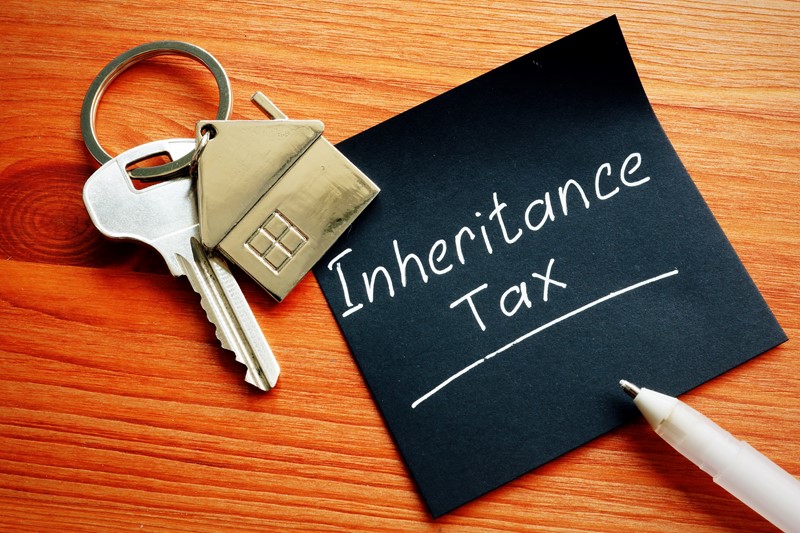
If you inherit property, you are usually not liable to pay tax on the inheritance. This is because any Inheritance Tax (IHT) due should be paid out of the deceased’s estate before any cash or assets are distributed. 

The rate of IHT currently payable is 40% on death and 20% on lifetime gifts. IHT is payable at a reduced rate on some assets if 10% or more of the 'net value' of the estate is left to charities.

If you inherit a property, you are not immediately liable for Stamp Duty, Income Tax or Capital Gains Tax. HMRC would contact you if any IHT was payable.

If you receive an inheritance, you will be liable to Income Tax on any profit earned after the inheritance, for example, Capital Gains Tax (CGT) on the increase in property value after the date of inheritance or tax on rental income. If inheriting a property means you own two properties, you must tell HMRC which property is your main home within two years. There are special rules if the property is held in trust.

Source: HM Revenue & Customs Tue, 13 Dec 2022 00:00:00 +0100

The Rent a Room Scheme

The rent-a-room scheme is designed to help homeowners who rent-a-room in their home. If you are using this scheme, you should ensure that rents received from lodgers during the current tax year do not exceed £7,500. The tax exemption is automatic and if you earn less than £7,500 there are no specific tax reporting requirements. If required, homeowners can opt out of the scheme and record property income and expenses as usual.

The relief only applies to the letting of furnished accommodation and is available when a bedroom is rented out to a lodger by homeowners. The relief also simplifies the tax and administrative burden for those with rent-a-room income of up to £7,500. The limit is reduced by half if the income from letting accommodation in the same property is shared by a joint owner of the property.

The rent-a-room limit includes any amounts received for meals, goods and services provided, such as cleaning or laundry. If gross receipts are more than the limit, taxpayers can choose between paying tax on the actual profit (gross rents minus actual expenses and capital allowances) or the gross receipts (and any balancing charges) minus the allowance – with no deduction for expenses or capital allowances.

Source: HM Revenue & Customs Tue, 13 Dec 2022 00:00:00 +0100

Using the HMRC app to make Self-Assessment tax payments

A new press release from HMRC has revealed that more than 50,000 taxpayers have used the HMRC app to make Self-Assessment tax payments since February 2022. Payments can be made safely and securely through the app. In October alone, more than 6,700 Self-Assessment taxpayers paid almost £5.9 million in tax via the HMRC app, compared to around 2,500 customers in February 2022, who paid £1.8 million.

Commenting on the payments, HMRC’s Director General for Customer Services, said:

'We’re seeing more and more people embrace the convenience and flexibility the HMRC app offers. Self-Assessment customers can pay the tax owed through the HMRC app, which is a secure and convenient tool that can be used at a time and place to suit them.'

The free HMRC tax app is available to download from the App Store for iOS and from the Google Play Store for Android. 

The app can also be used to complete a number of other tasks that include:

  • to renew and report changes to your tax credits;
  • access your Help to Save account;
  • using HMRC’s tax calculator to work out your take home pay after Income Tax and National Insurance deductions;
  • track forms and letters you’ve sent to us;
  • claim a refund if you’ve paid too much tax; and
  • update your postal address.
Source: HM Revenue & Customs Tue, 13 Dec 2022 00:00:00 +0100

Post-cessation receipts and expenses

Tax relief may be available for post-cessation expenses of a trade. In order to be an allowable post-cessation expense, the trade must have ceased, and the expense must have been deductible in calculating the trading profits.

This means that the expense still has to meet the wholly and exclusively test and be revenue, not capital, expenditure. The expenditure can be apportioned if necessary. The way in which post-cessation expenses can be relieved depends on the person incurring the expenditure and the type of expenditure incurred.

The following are examples of expenses that would likely be categorised as post-cessation expenses:

  • remedying defective work done, goods supplied, or services rendered while the business was continuing or as damages in respect of such defective work, goods or services whether awarded by a Court or agreed during negotiations on a claim;
  • paying legal or other professional expenses incurred in connection with the costs above;
  • insuring against liabilities arising out of any such claim or against the incurring of such expenses; and
  • collecting, or seeking to collect, debts which were considered in computing the profits of the trade before discontinuance.

An expense specifically relating to the cessation itself is not an allowable expense.

Source: HM Revenue & Customs Tue, 13 Dec 2022 00:00:00 +0100

Collecting tax from wealthy taxpayers

An updated briefing which looks at how HMRC deals with wealthy individuals has been published. The briefing looks at helping wealthy individuals to comply with their tax obligations and also what happens to those who don’t play by the rules. According to HMRC, the High-Risk Wealth Programme (HRWP) aims to accelerate the resolution of some of the most complex and high-risk cases within the wealthy customer group.

HMRC defines individuals as ‘wealthy’ if they have incomes of £200,000 or more, or assets equal to or above £2 million in any of the last 3 years. According to HMRC, there are approximately 800,000 wealthy taxpayers. HMRC uses details from tax returns and other public information databases to identify links between people, organisations, assets and income.

Wealthy customers are managed by the Wealthy Team within HMRC’s Customer Compliance Group. The team applies a proactive and co-operative approach, taking into account the unique nature of this customer group’s tax affairs.

According to HMRC, wealthy individuals may present a higher risk of error than other customers as the amounts involved are greater also because they may have investments in more than one country, making their financial affairs more complex. 

The Wealthy Team also works with colleagues across HMRC, including Fraud Investigation Service and Counter-Avoidance, handling marketed avoidance schemes and offshore disclosure. This means that HMRC can see a taxpayer's past history including involvement in a tax planning scheme or the use of offshore bank accounts and use this information to help identify taxpayers for further investigation.

Source: HM Revenue & Customs Tue, 13 Dec 2022 00:00:00 +0100

Companies with 31 December year-end date

Have you considered any last-minute planning options if your company has a 31 December 2022 year-end date?

It is not too late to consider your options. For example:

  1. Expenditure on qualifying plant or other equipment may qualify for the super-deduction capital allowance. This would allow you to write off 130% of cost against your profits for 2022 if the purchase was completed before 31 December 2022.
  2. Which is the best option, to take 2022 bonuses before or after 31 December 2022?
  3. If you are expecting profits to reduce in the first quarter of 2023, perhaps making a loss in this period, would it reduce your corporation tax bill if you extended your accounting date to 31 March 2023, and use the first quarter losses earlier?
  4. Have you prepared a budget for 2023?
  5. Have you updated any business exit plans?

These options are the tip of the planning iceberg. Please call so we can decide if there are any options available before the 31 December deadline.

2023 is likely to be a challenging year with a projected recession, continuing high inflation and upward pressure on interest rates.

Make sure you don’t miss out. Take time out to consider your options now.

Source: Other Mon, 12 Dec 2022 00:00:00 +0100

Claiming back pre-trading VAT costs

There are special rules that determine the recoverability of pre-trading VAT costs. Pre-trading VAT costs describe VAT that was incurred before a business registered for VAT and is known as pre-registration input VAT.

There are different rules for the supply of goods and services, but VAT can only be reclaimed if the pre-registration expenses relate to the supply of taxable goods or services by the newly VAT registered business.

The time limit is backdated from the date of registration and is:

  • 4 years for goods you still have or goods that were used to make other goods you still have; and
  • 6 months for services.

The VAT should be reclaimed on the business's first VAT return. When a new VAT registration is applied for it may be possible to backdate the registration (known as the effective date of registration). This should be considered if there is additional input tax that will be made recoverable.

There are special rules for partially exempt businesses and for businesses that have non-business income and for the purchase of capital items within the Capital Goods Scheme (CGS).

Source: HM Revenue & Customs Tue, 06 Dec 2022 00:00:00 +0100

What is a defined contribution pension?

A defined contribution pension (sometimes referred to as a money purchase pension scheme) is a type of pension scheme where the pension pot is based on how much money is paid into the scheme. This is markedly different to a defined benefit pension schemes which usually relates to workplace pensions where the pension provider promises to give you a certain amount each year when you retire.

A defined contribution pension can be a company or private pension. The pension pot is based on monies added by you and / or your employer. This money is invested by the pension provider. The final return with these pensions is not guaranteed and the value of the pension pot can go up or down depending on how investments perform.

There are three main options available at retirement, lifetime annuity, flexi-access drawdown and a lump sum payment. These options can be used on their own or in combination. The first 25% drawdown is tax-free and the remainder is taxed at the individual’s marginal rate.

There are no overall limits to employer or employee contributions and no upper limit to the total amount of pension saving that can be built up. However, there are limits that affect tax relief on pension contributions including an annual and lifetime allowance.

Source: Pensions Regulator Tue, 06 Dec 2022 00:00:00 +0100

Don’t forget those trivial benefits

Don’t forget to take advantage of tax-free trivial benefits. If you are an employer and looking to give your employees a small token of appreciation then your best option is probably to give them a gift. In order to ensure that this is not a taxable gift, it is important to ensure that the trivial benefits in kind (BiK) rules apply.

There is no tax to pay on trivial benefits in kind (BiK) provided to employees where all of the following apply:

  • the benefit is not cash or a cash-voucher; and
  • costs £50 or less; and
  • is not provided as part of a salary sacrifice or other contractual arrangement; and
  • is not provided in recognition of services performed by the employee as part of their employment, or in anticipation of such services.

So, for example a food gift that costs £45 would qualify as would a £15 bottle of wine. It is also possible to provide employees with a gift voucher (not a cash-voucher) where the value is £50 or less. It is important to remember that the gifts must not be provided in recognition of the employees’ services but merely as a gesture of goodwill.

There is an annual cap for directors of a ‘close’ company of £300 per year. If the gifts have a value of over £50 or cannot be counted as a trivial benefit, then the gift must be reported on form P11D and Class 1A NICs will be payable on the value of the gift.

Source: HM Revenue & Customs Tue, 06 Dec 2022 00:00:00 +0100

What is a salary sacrifice?

A salary sacrifice arrangement is an agreement to reduce an employee’s entitlement to pay, usually in return for a non-cash benefit. The tax and NIC advantages of certain benefits provided as part of a salary sacrifice arrangement were removed from 6 April 2017. The change removed the income tax and employer NIC advantages of certain benefits provided as part of salary sacrifice arrangements such as mobile phones and workplace parking. There was a transitional plan in place for certain benefits that ended on 6 April 2021.

The following benefits are currently not subject to Income Tax or National Insurance contributions and do not have to be reported to HMRC:

  • payments into pension schemes;
  • employer provided pensions advice;
  • workplace nurseries;
  • childcare vouchers and directly contracted employer provided childcare that started on or before 4 October 2018, and
  • bicycles and cycling safety equipment (including cycle to work).

If an employee wants to opt in or out of a salary sacrifice arrangement, the employer must alter their contract with each change. The employee’s contract must be clear on what their cash and non-cash entitlements are at any given time.

It may also be necessary to change the terms of a salary sacrifice arrangement where a lifestyle change significantly alters an employee’s financial circumstances. This may include marriage, divorce and a partner becoming redundant or pregnant. Salary sacrifice arrangements can allow opting in or out in the event of lifestyle changes like these.

Source: HM Revenue & Customs Tue, 06 Dec 2022 00:00:00 +0100